You do not need to begin AI adoption with a company-wide system. A useful first project is often one repeated workflow with understandable inputs, a clear output and someone who can review the result.
The framework below is a planning approach. Its examples are illustrative, not Smallution customer performance figures or delivery commitments.
1. Start with repeated work, not a tool
Ask your team which tasks they repeated during the last week. Examples might include turning enquiries into a follow-up list, preparing a routine report from a spreadsheet, or drafting a response from approved information. Describe how the work happens before choosing software.
Compare frequency, time spent, input availability and the consequences of an error. Frequently repeated work with manageable consequences gives you a clearer basis for a small pilot. Keep explicit human approval for steps that make important commitments or sensitive decisions.
- Who starts the task, and what triggers it?
- Which documents, tables and systems does the person consult?
- What must be delivered, and who receives it?
- When should the workflow stop and ask a colleague for help?
2. Define inputs, rules and exceptions
Automation needs a dependable input. If customer identifiers differ between spreadsheets or a price list has no effective date, adding AI does not resolve the ambiguity. Establish the trusted source, required fields and ownership of updates first.
Prepare a small set of examples with sensitive details removed. Include ordinary requests, missing information and exceptions. These examples can support both the design discussion and later acceptance checks.
| Element | Example: enquiry preparation |
|---|---|
| Input | Enquiry, contact details and received time |
| Processing | Classify the request and identify missing information |
| Output | A follow-up list awaiting review |
| Exceptions | Unclear requests, complaints, pricing or commitments |
3. Let AI prepare and people confirm
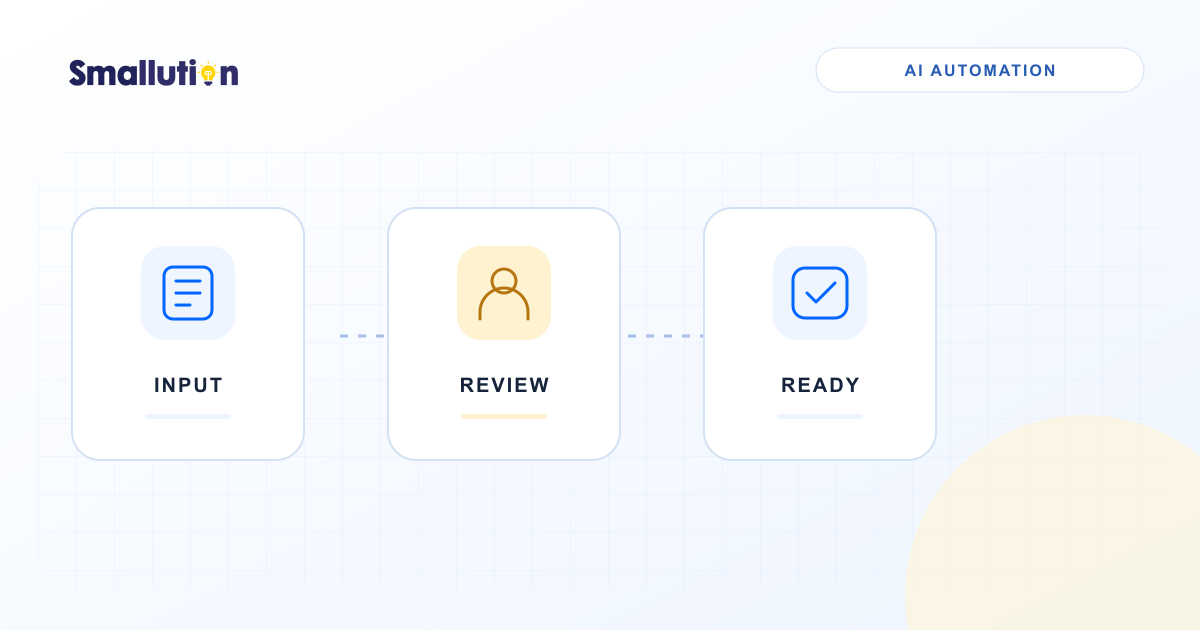
A first version can produce suggestions or drafts without sending messages or changing production records. A reviewer should compare the result with its inputs, check whether the right source was used and identify anything that needs correction.
Design the review step as carefully as the automated step. Someone needs to own the queue, see the source material and be able to return, amend or skip a result. Missing information should be visible rather than replaced with a plausible-looking answer.
4. Compare the pilot using consistent measures
Record the existing process before the pilot and use the same definitions afterwards. Generation speed alone is not a useful measure of the whole workflow: include the time spent checking and correcting outputs.
For example, have the same owner review a batch of work each week and record completion time, corrections, missed cases and handoff quality. If a draft appears quickly but takes longer to fix, improve the inputs or narrow the task before expanding it.
- Total processing and review time per case
- The proportion of cases that need correction or rework
- Reasons for incomplete work and human handoffs
- Whether colleagues can use the process in their normal working day
5. Use the results to decide what to connect next
Once you have comparable results, you can make a more informed decision about connecting email, a customer management platform or another production system. Integration also brings questions about permissions, duplicates, retries and a manual fallback.
Take a one-page workflow description, a few prepared examples and a list of current systems to your development discussion. That gives everyone a firmer starting point than a request to simply add AI.